Production demands rarely point toward one machining method. Part volume, geometry, tolerances, and turnaround needs shape the right choice. For a machine shop Dallas manufacturers can rely on, understanding those variables helps match equipment with practical goals. CNC machining suits repeatable production, while manual machining remains valuable for custom work, repairs, and quick adjustments.
CNC machining supports repeatable production
CNC equipment excels when consistency matters across batches. Computer-controlled movements reproduce programmed dimensions with tight repeatability. Complex contours also become easier to manage. For production runs, that consistency reduces variation between finished components and simplifies inspection requirements.
- Repeated parts maintain consistent dimensions.
- Programs preserve established cutting sequences.
- Complex profiles require fewer manual adjustments.
- Production output scales with predictable cycle times.
Manual machining keeps custom work flexible
Manual machines offer direct control during fabrication. Skilled machinists can adjust feeds, depths, and positioning as conditions change. That flexibility suits prototypes, repairs, one-off components, and urgent modifications. A manual lathe can also handle a simple shaft without programming overhead.
For a machine shop Houston, this approach remains useful when specifications change during fabrication. Custom jobs often benefit from immediate hands-on decisions.
Which method suits complex geometry?
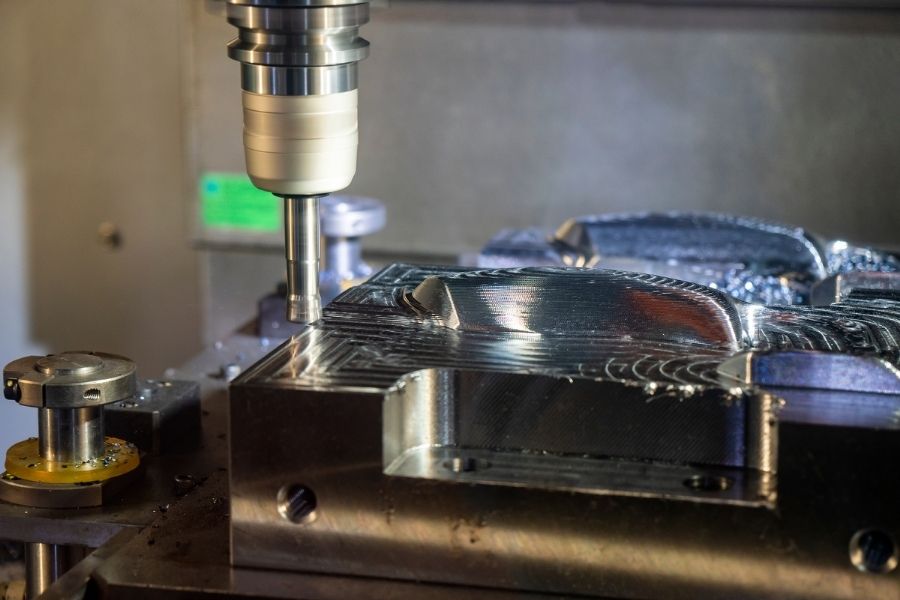
CNC machining gains an advantage when geometry becomes intricate. Multiple axes can coordinate movement around curved surfaces and detailed features. Manual equipment requires more operator intervention for comparable shapes. Yet complexity alone should not determine the choice. A simple component may still favor manual production when quantity remains low.
Production volume changes the cost equation
Quantity strongly influences machining economics. CNC programming requires setup time before cutting begins. That initial effort becomes easier to justify across larger batches.
- Short runs can favor direct manual setup.
- Larger batches spread programming costs.
- Repeated orders strengthen CNC’s financial case.
- Urgent prototypes may favor immediate manual work.
Can tolerances determine the process?
Tight tolerances demand controlled machining conditions. CNC systems can maintain programmed movements across repeated operations. Manual machining depends more heavily on operator technique and measurement discipline. For a critical bearing seat, consistent positioning can matter more than raw cutting speed. Inspection planning should support either process from the beginning.
Matching equipment to production reality
The strongest choice comes from the job’s actual demands. A prototype may reward manual flexibility, while hundreds of identical housings favor CNC consistency. Neither process wins every application. The key distinction is economic: programming effort becomes an asset when the same geometry returns repeatedly.
FAQs
Is CNC machining better for large orders?
CNC equipment often suits larger batches because repeatable programming reduces variation and setup costs across production.
When is manual machining preferable?
Manual machining works well for prototypes, repairs, one-off parts, and modifications requiring frequent operator judgment.
Does CNC always provide tighter tolerances?
CNC equipment can support precise tolerances, but tooling, measurement, machine condition, and process control also matter.
Can one shop use both methods?
Yes. Combining CNC and manual equipment lets production teams match each component with its actual fabrication requirements.
Categories: Business
